Photo, video, copy, other projects.
Produced, shot, edited.
Produced, shot, edited.

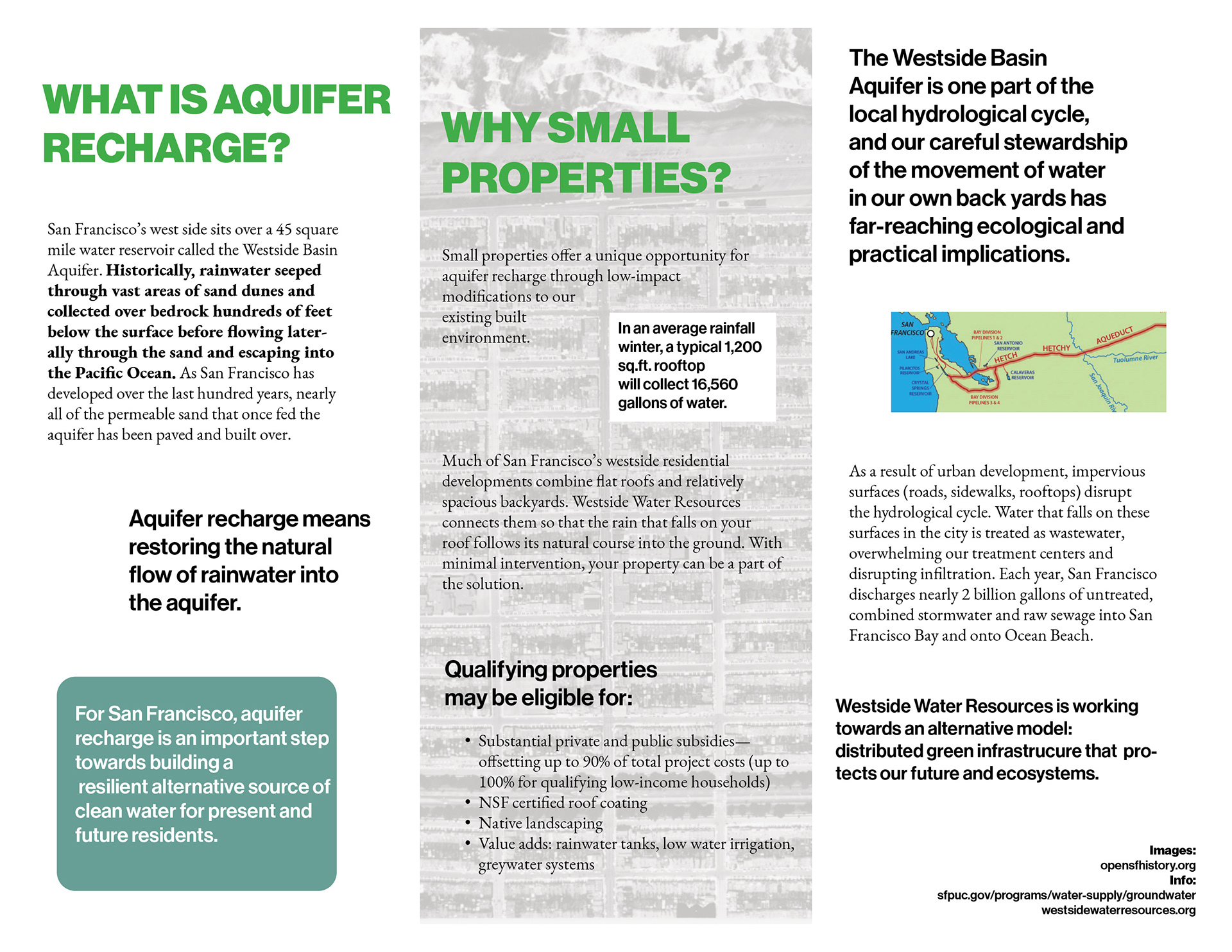
Copy and design.
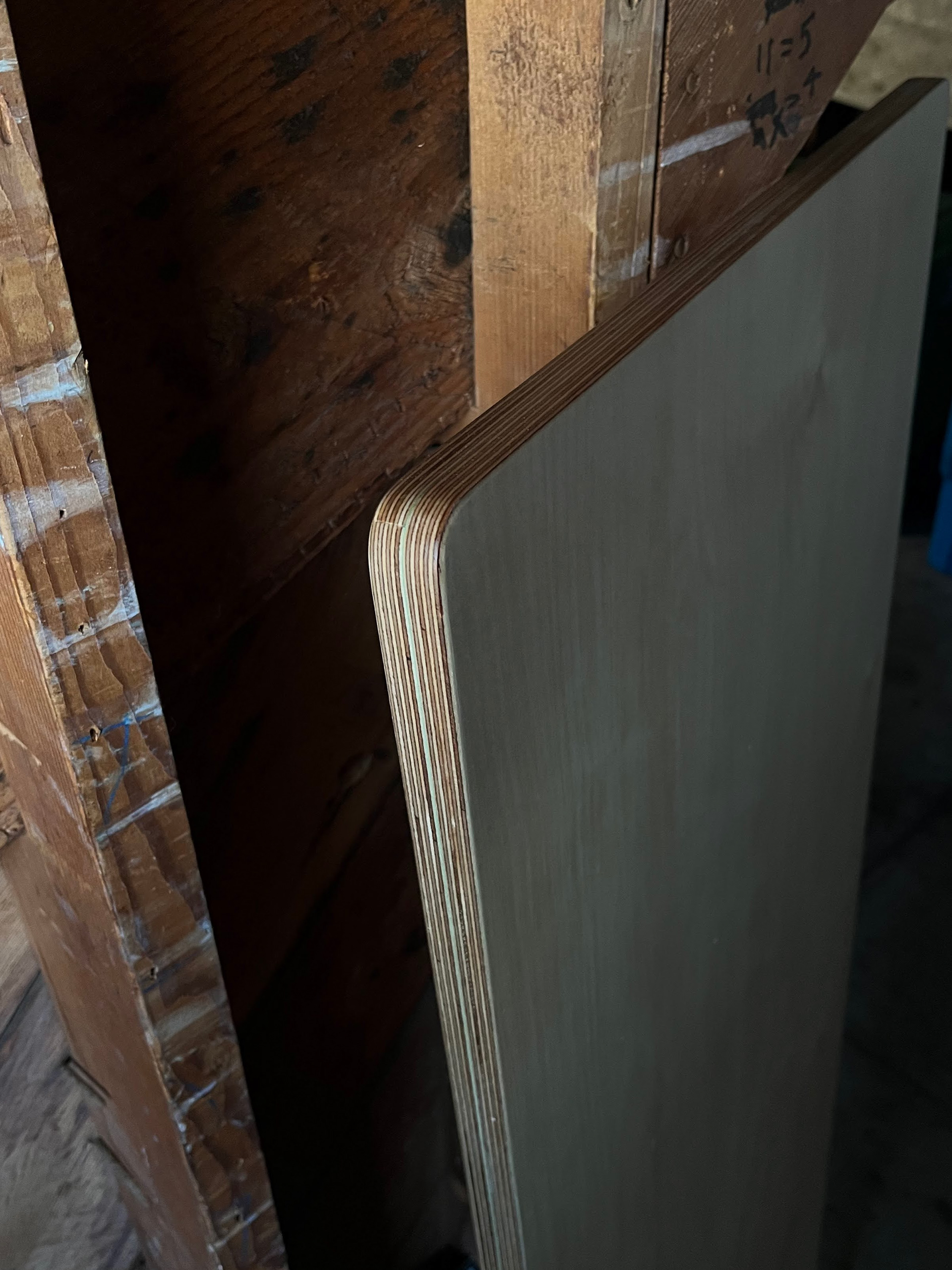
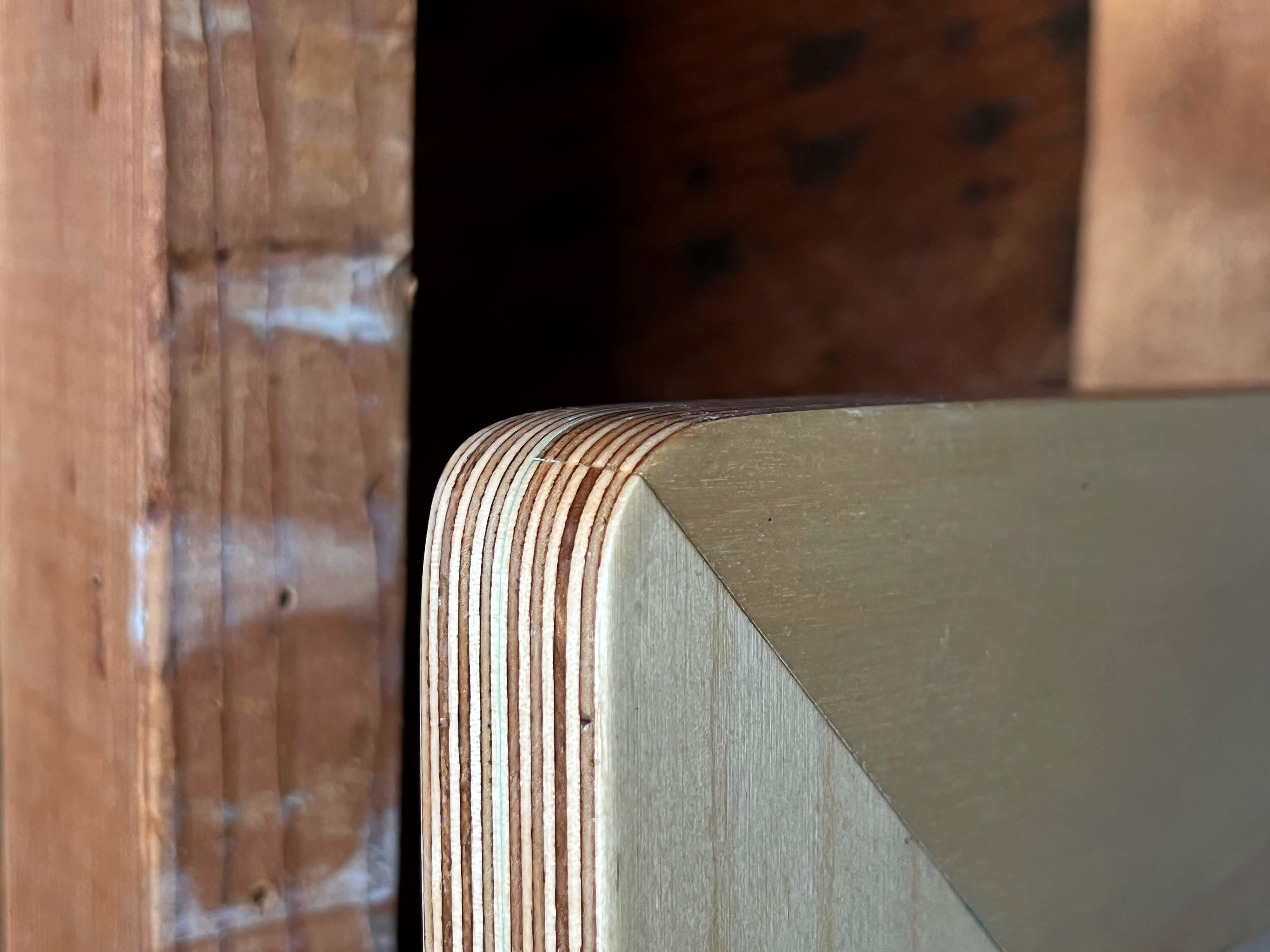
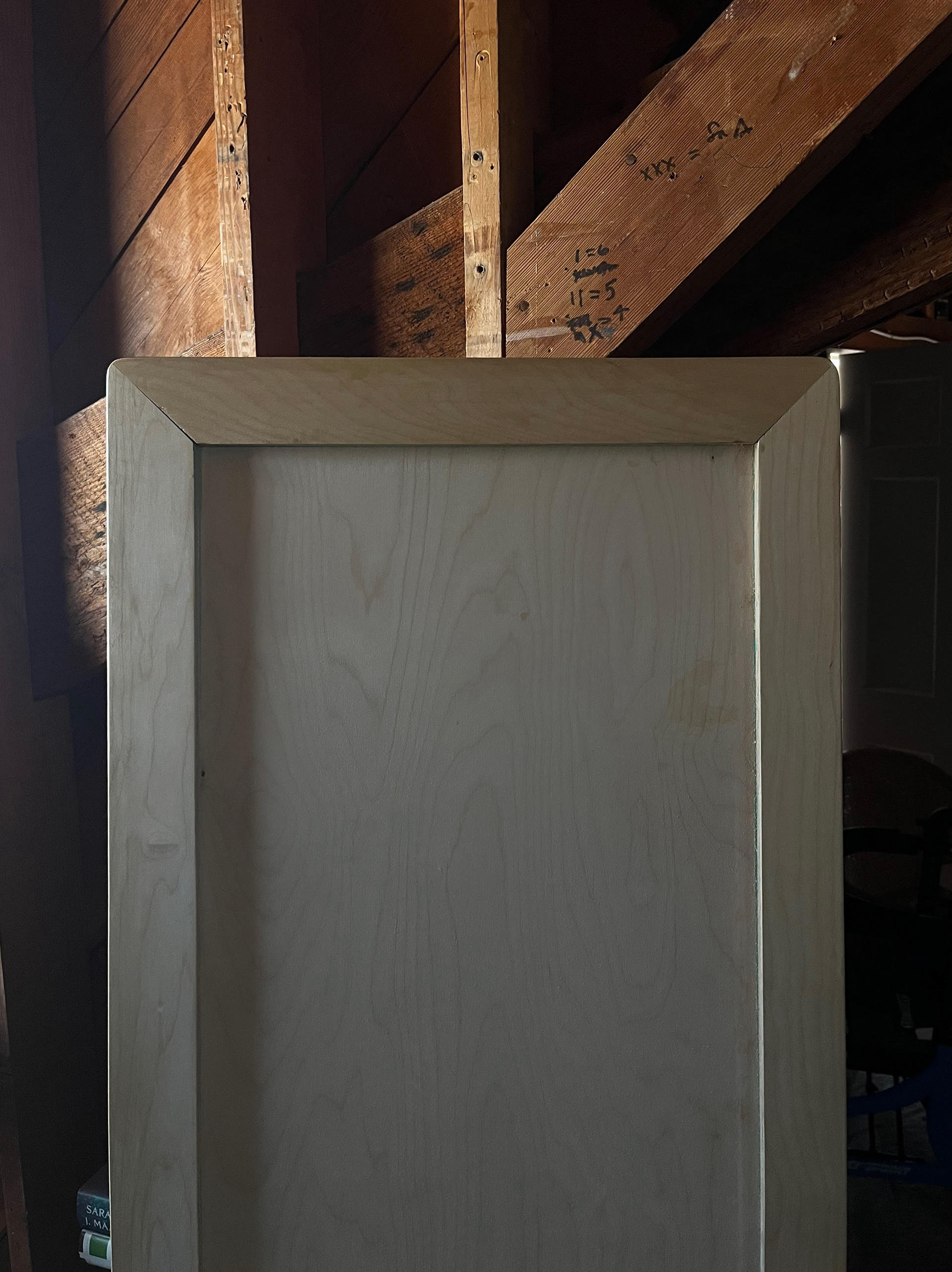
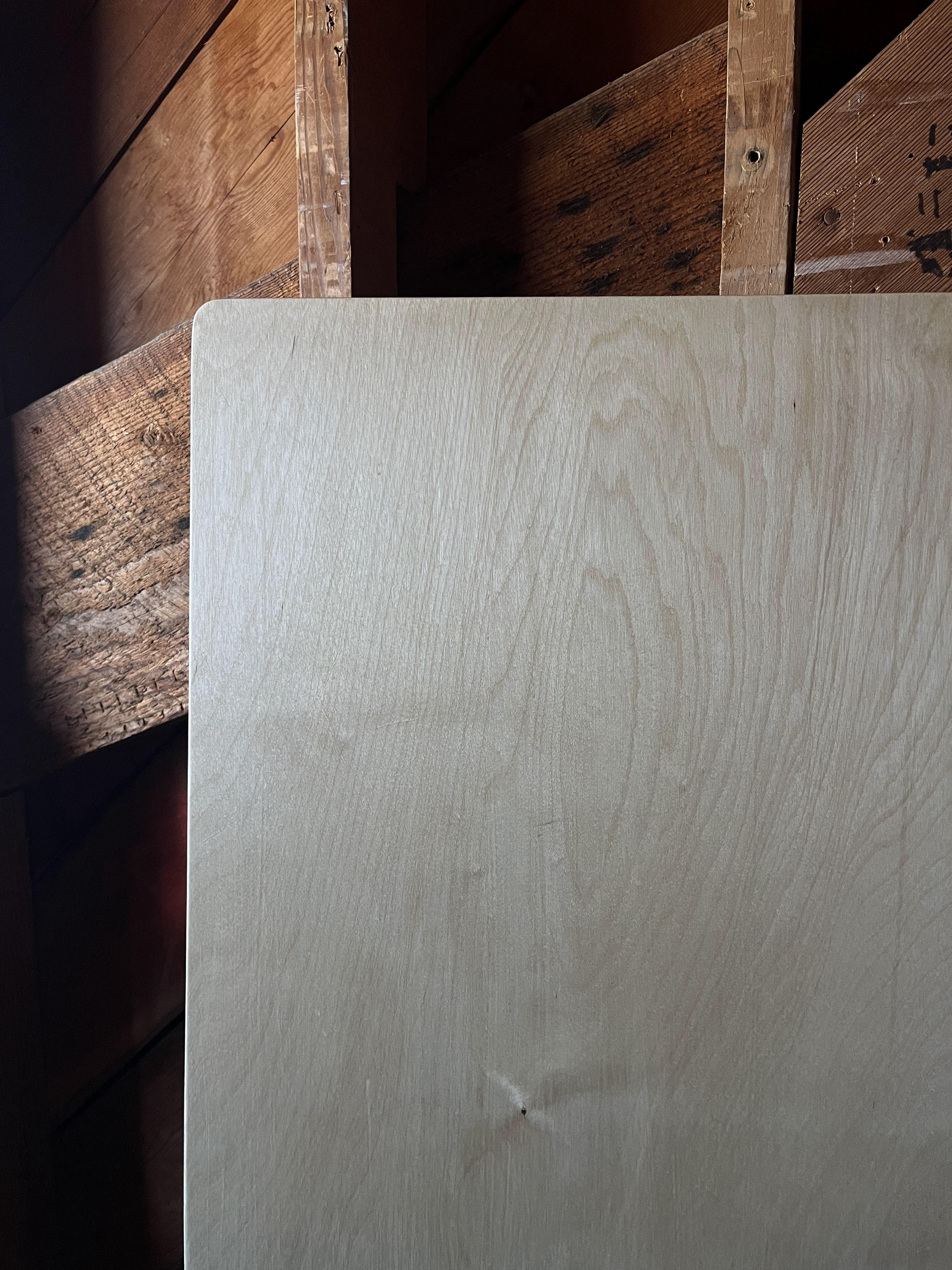
Designed and built tabletop.
Produced, shot, edited.
Shot, edited.
Produced, shot, edited.



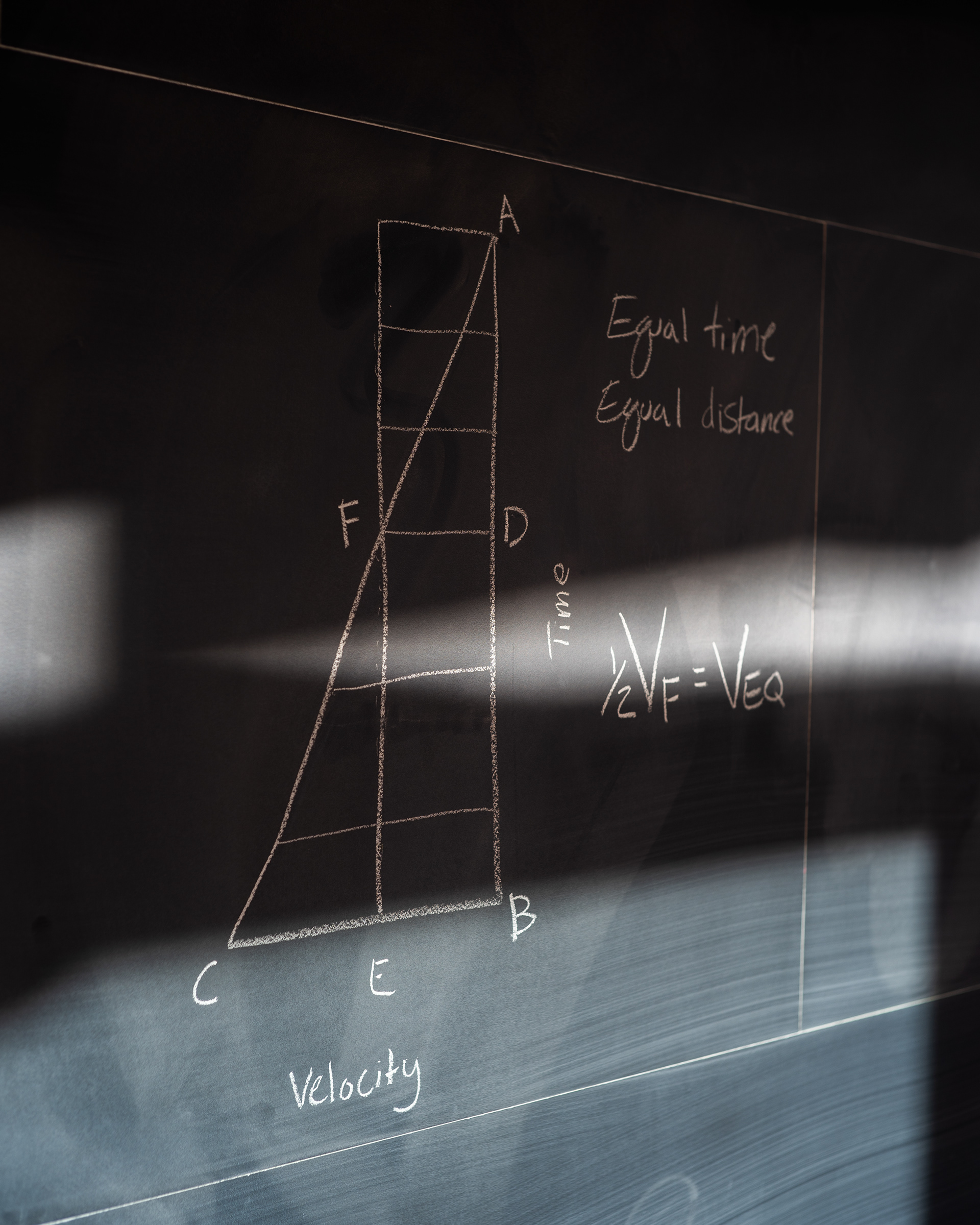
















Shot, edited.
Shot, edited.
Animated in After Effects from scratch for St. John's College
Shot, edited.
Animated logo in After Effects for use across all St. John's College media platforms.
Caption:
Students in Junior Lab get a first-hand experience of Galileo’s proof that the equable forward motion (rolling on the right-hand side) and the downward force exerted by gravity compound with each other such that the ball traces a parabola across the page as it falls. This is recorded by the trail of paint left on the graph paper.
Parabolas are not just any arcing shape—their curves are defined by a specific proportional relationship between the vertical and horizontal distances from the vertex of the parabola. The vertical distances are to each other as the squares of the horizontal distances for any two given points. If we measure the distances traced on the paper by the green ink, we find that a ball falling according only to the natural force of gravity (accelerative) and a constant motion (equable) traces a path through space that follows these exact proportions. Apollonius laid out the characteristic relationship for parabolas in 200 BC, and Galileo was working on this experiment in 1638 AD. What might it look like to grapple with the fact the natural workings of our world accord so closely with geometrical relationships reached thousands of years before?
Caption:
Is the matter of electricity a particle or a wave? Seniors investigate this through Millikan's oil drop experiment, where atomized drops of oil are sprayed into the space between two oppositely charged plates. Some rise, some fall, but they all do so at slightly different rates. Why does this happen? Some oil droplets, with neither enough negative nor positive charge to have a force exerted on them by the charged plates, simply fall with gravity. Other droplets, possessing either a positive or negative charge, are drawn towards the plate of opposite charge with a definite velocity corresponding to the force exerted on the particle in drawing it towards the plate.
In the video you can see the illuminated oil droplets changing direction--this is the result of an operator switching the charge on the plates thus causing the charged oil droplets to move in opposite directions.
For example, a more negatively charged particle will move toward the positive plate with a velocity proportional to its charge. This let Millikan examine the velocities of the oil droplets as a way of looking at how much charge they possessed. He found that the oil droplets moved towards the plates with velocities that spontaneously increased or decreased by definite increments or multiples of the same increment. This suggested to him that the charge of these droplets was increasing or decreasing by a specific unit of charge. Why might this lead us to think of electrical charge as a particle?